


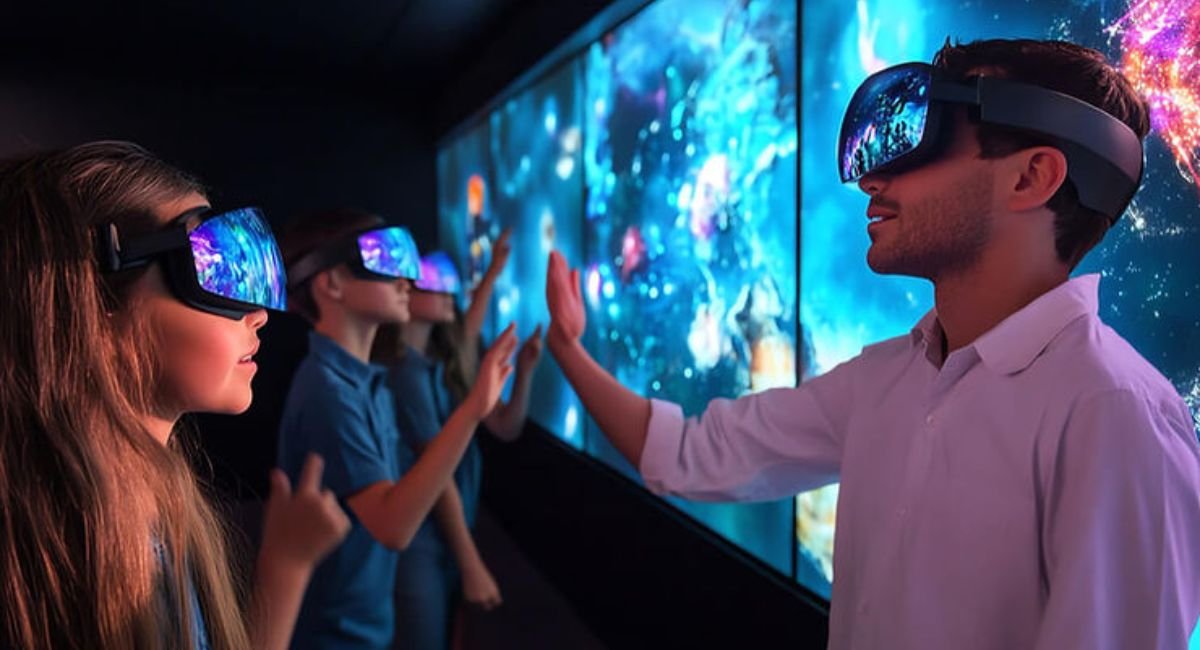
VR technology is storming the world, transforming the way we experience entertainment. VR is not science fiction anymore. It’s not merely a fantasy world of immersive experiences and magical worlds. It is embedded in our digital environment and produces new worlds for users to experience.
Gaming, virtual travel, and the possibilities are endless. In this blog post, we will explore the exciting evolution of VR technology and the key components that make these experiences possible, such as VR headsets. Streaming services are changing to meet the growing demand, while mixed reality is changing how we experience entertainment.
Come along with us on an exciting journey into the world of VR technology and see what the future holds for digital entertainment!
VR Headsets 101
VR headsets allow users to explore virtual reality. These devices immerse users in colorful digital worlds in a way that normal screens can’t, giving them a feeling of presence.
How VR Headsets Work
A VR headset is basically a combination of lenses and a screen that creates 3D images. The headset follows your head movements, so you get a more complete experience where the perspective changes in real time. Many models also include built-in audio for extra immersion.
Comfort and Design Matter
Whenever it comes to wearing something, long-term comfort is important. Lightweight designs and adjustable straps help users stay comfortable without experiencing unnecessary fatigue.
There are plenty of options for different budgets and needs, allowing users to find a headset that suits their requirements. From high-end to budget-friendly options, these devices have become technologically advanced, offering better graphics and motion tracking than ever before.
In this fascinating area, excitement and imagination are growing, and VR headsets have become essential tools for discovery and entertainment.
VR Industry Embraces Streaming’s Growing Popularity
The VR industry is changing alongside streaming services. Virtual reality has become increasingly digital, just like traditional media.
Streaming Makes VR More Accessible
This new wave means content can be immersive without requiring users to have the most powerful hardware. Streaming can make VR experiences more accessible and potentially more affordable.
There are new platforms offering everything from games to virtual environment experiences. These services can give users access to extensive content libraries through their headsets, making digital entertainment more engaging.
Multiplayer Experiences in Virtual Worlds
Real-time multiplayer experiences are also becoming increasingly important. Friends and strangers alike can meet in shared virtual spaces.
Whether it involves gaming or interactive storytelling, the possibilities for shared digital experiences continue to expand.
Technological advancements are reshaping the boundaries of entertainment, and the future of streaming in VR offers many possibilities. The blend of convenience and immersion is changing the way people consume digital content.
Mixed Reality and Its Effect on Digital Entertainment
Mixed reality (MR) is an emerging entertainment space that combines the real world with digital elements. It allows users to interact with virtual and physical environments in new ways.
Blending the Physical and Digital Worlds
Imagine wearing a pair of MR glasses and seeing characters from your favorite game or show appear within your living room. Interactive digital elements can make entertainment feel more connected to the user’s surroundings.
Such immersive experiences are changing how audiences consume content.
Mixed Reality in Gaming
Gaming companies are playing an important role in the development of this technology, giving players new ways to engage with virtual worlds. The range of experiences continues to grow, from adventure games to simulations.
MR and Live Entertainment
MR is also influencing live events beyond gaming. Concerts and theater performances can incorporate digital characters, holographic effects, and interactive elements to create new forms of entertainment.
This convergence of realities not only fires the imagination of viewers but also inspires content creators to explore new forms of storytelling and engagement.
Privacy Issues Pertaining to VR
Privacy issues are increasingly important as VR technology evolves. People share information about themselves while entering virtual worlds, raising questions about who can access that information and how it may be used.
VR Data and User Tracking
VR headsets can track movement and, depending on the device and applications involved, may process various forms of biometric or behavioral data. These insights can improve user experiences, but they can also create privacy risks if they are not properly managed.
Privacy in Social VR
The social side of VR adds another dimension to the privacy discussion. Conversations and interactions within virtual spaces may involve data collection, recording, or monitoring depending on the platform and its policies.
As this technology develops, privacy should remain an important consideration for both developers and consumers. Secure systems will be critical to establishing confidence within the VR community and encouraging safe exploration of digital worlds.
VR and Mature Content: A Deep Dive
The VR mature-content market reflects the broader evolution of digital entertainment. New technologies are opening up new avenues for creators to reach audiences beyond traditional media.
Immersive Storytelling and User Experience
VR can create a more emotionally engaging experience by placing users directly inside an interactive environment. Traditional screens once served as entry points into stories, while immersive technology can provide a deeper sense of presence and interaction.
Safety, Consent, and Age Verification
With greater immersion comes greater responsibility. Developers need to consider the balance between creative expression and user comfort.
Robust age-verification systems, appropriate content controls, privacy protections, and meaningful user choice can help create safer virtual environments. Mature themes can be complex, but experiences should prioritize consent, safety, and responsible design.
As more affordable VR headsets become available, demand for different types of content may increase. VR has the potential to support mature entertainment, richer storytelling, and new creative approaches while also raising important ethical questions.
Conclusion: The Future of VR Entertainment
The VR technology space is moving quickly, creating interesting opportunities across entertainment and other digital experiences. VR headsets are becoming more powerful and accessible, enabling increasingly immersive virtual environments.
Streaming platforms are also responding to changing consumer expectations by providing more on-demand digital content. At the same time, mixed reality is developing into a new storytelling medium that can blur the boundaries between physical and digital environments.
This combination could not only enhance gaming but also expand the potential applications of immersive technology in areas such as education, training, virtual events, and interactive experiences.
